As we get back into rainy and winter months we get harshly reminded of our footwear choices. It’s worth a recap for the mind or for those new to commuting / riding in inclement weather the right gear can make hell of a difference. Any of the following products will make your ride more comfortable, allowing you to ride for longer or motivating you to ride when otherwise you wouldn’t.
Let’s get into three choices that will mayke your day / week / winter season. The three contenders in discussion are:
1) Booties / overshoes
2) Waterproof socks
3) Winter Specific shoes
Booties (overshoes)
These slip over your regular cycling shoes to offer a barrier from the elements. they are available from many manufacturers and cost in the region of $50 to $90


Pros & Cons
Pro’s
- Use your normal cycling shoes
- Very effective at keeping majority of water out
- Good materials don’t soak through “that” easily
- Post ride Booties dry out fast
- Often accommodate a road or mtb cleat
Cons
- May wear out fast – if you are on and off the bike a lot, then durability can be an issue.
- Some bootie designs leave a lot of the underside of your shoe exposed, which may let in some water depending on your riding and bike setup.
- Getting on and off the shoe can be tricky depending on design.
- Choosing size can be tricky
Bootie Design
Some booties have one large opening on the bottom, these tend to let water in a bit more. Others have two openings, one at the heel and one at the cleat (see images). I find these to be the best balance. The heal opening allows grip and avoids wear. Some designs only have a cleat opening and I find the heel wears through very fast, as I often take some steps off the bike. Walking around in booties dramatically decreases the life / increase wear and tear. If you put them on ride then get to your destination and take then off, then this might not be an issue for you.
Designs often have zippers or velcro at the heal area to get on and off. Neither is better, zippers can fail over time and velcro can wear and become flappy. Some say a velcro one is easier to get on and off the shoe because the opening is larger. I find that a properly sized zipper model is no more difficult.
Bootie Materials
The mainstay are laminated materials, a warm material with a slippy waterproof top material, other materials include neoprene / scuba suit material . Both work well, neoprene tends to absorb some water after time but not let it through until deeply saturated and can be warmer than laminated materials. Laminated and coated materials however repel the water, although the coating tends to wear faster because it’s a coating and there is a lot of stretch required in booties. Some designs use more expensive layered materials with water barriers such as Gore or OuterDry. These can be good as they are waterproof but also breathe, these are often at the high end of the price range.
Bootie Tips (not Booty tips)
Because of tricky fitment and various sizes, it’s recommended to try a pair on with your cycling shoes at your local bike shop or REI rather than buy online. You want a snug fit, but not impossibly hard to slip on. You definitely do not want baggy, as it will let water in and could be dangerous if accidentally caught in cleat while stepping off. Useful links:
Why would you buy these?
Booties offer high value for money for those who don’t ride a lot in the rain. They can be had for $40 upwards and offer a good functional solution at the expense of a littlew fuss.
Waterproof Socks
These are fairly new in the last few years and are basically a knitted sock that has a waterproof lining that are worn like a normal sock inside your cycling shoe. They are typically around $40-50 and available from manufacturers like Endura or Showerspass.


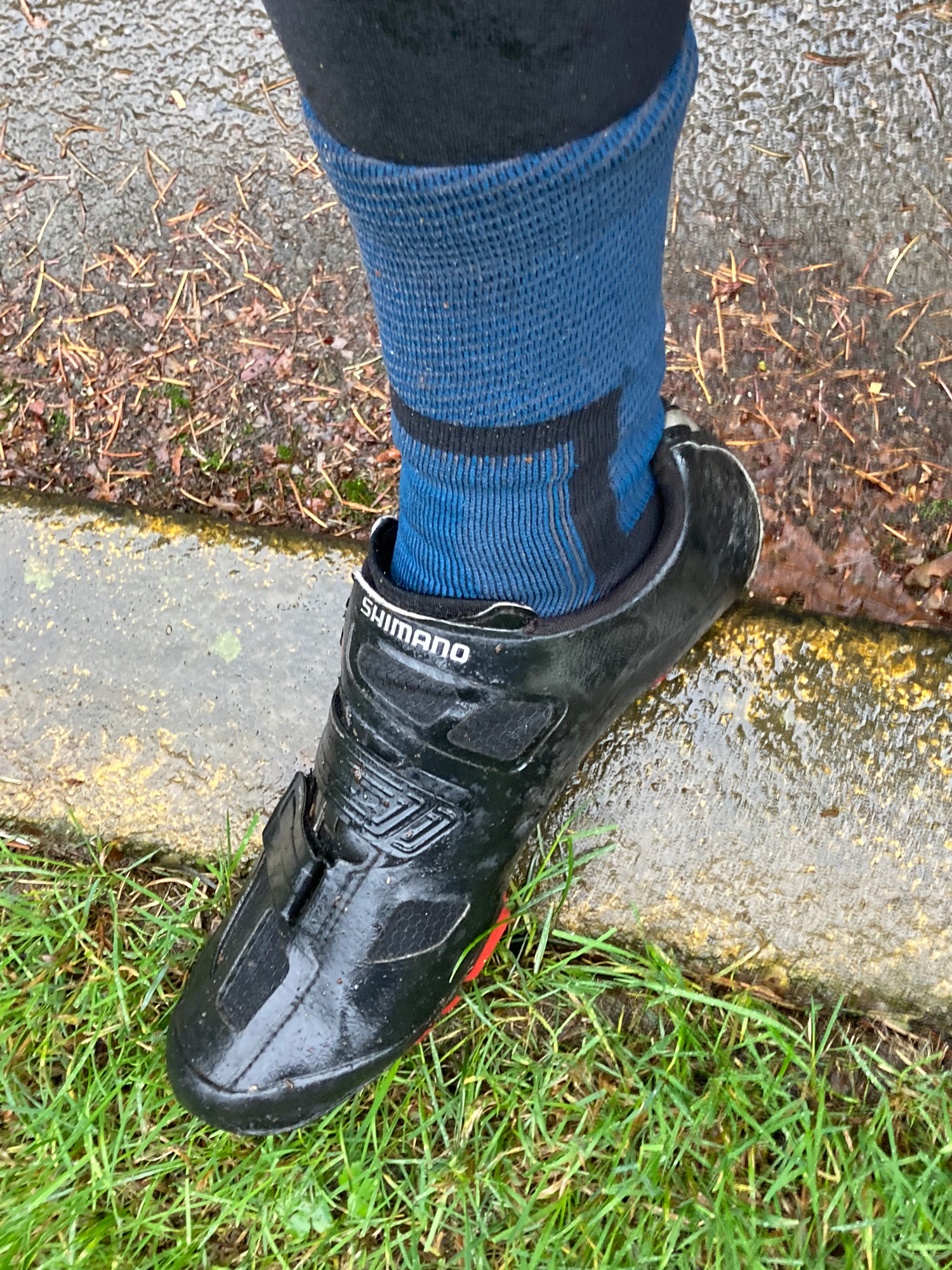
Pros and Cons
Pros
- Uses your normal cycling shoes
- Easy to use / put on
- Feels normal and natural since they sit inside your shoe
- Very Waterproof
Cons
- Can feel bulky, as they are thicker than normal socks, if you have a very tight fitting shoe this may be problematic. (The newer models SUPERLIGHT from Showers Pass are much thinner)
- Can feel like “rubber” sock
- If your feet sweat a lot, your foot will be damp and wrinkly skin at the end of ride.
- Shoe will get soaked and heavy, thus shoe will take longer to dry than booties
- Require some specific care to keep them waterproof, since they contain a membrane.
Sock Design
The evaluation of the waterproof sock has allowed companies to experiment with the waterproof barrier and the knitting process, such that you can get different thicknesses so to speak. I find the thinner or lighter weight ones to feel better, they fit better in the shoe and feel less like a rubbery sock. The large downside of this system for me is the shoe absorbs all the water, including the insole. In practice this means the shoe can become very mushy, heavy and waterlogged feeling when compared to using a good shoe cover / bootie. In situations of light rain / sorter rides then this may not be an issue.
The socks can be very effective in keeping your feet dry, note that if you sweat a lot, your feet will feel wrinkly and damp, since breathing is not that great.
useful links:
Showerspass Waterproof Crosspoint Socks
Why would you buy these?
Waterproof socks offer a new alternative solution, that are easy to use and won’t break the bank.
Winter Shoes
These are cycling shoes specifically designed for winter. Often these shoes provide superior protection to the elements because they are made with high quality waterproof and breathable materials and insulation to keep feet warm. They generally use an SPD mountain bike style cleat. They are available from manufacturers like Lake, 45Nrth and Shimano

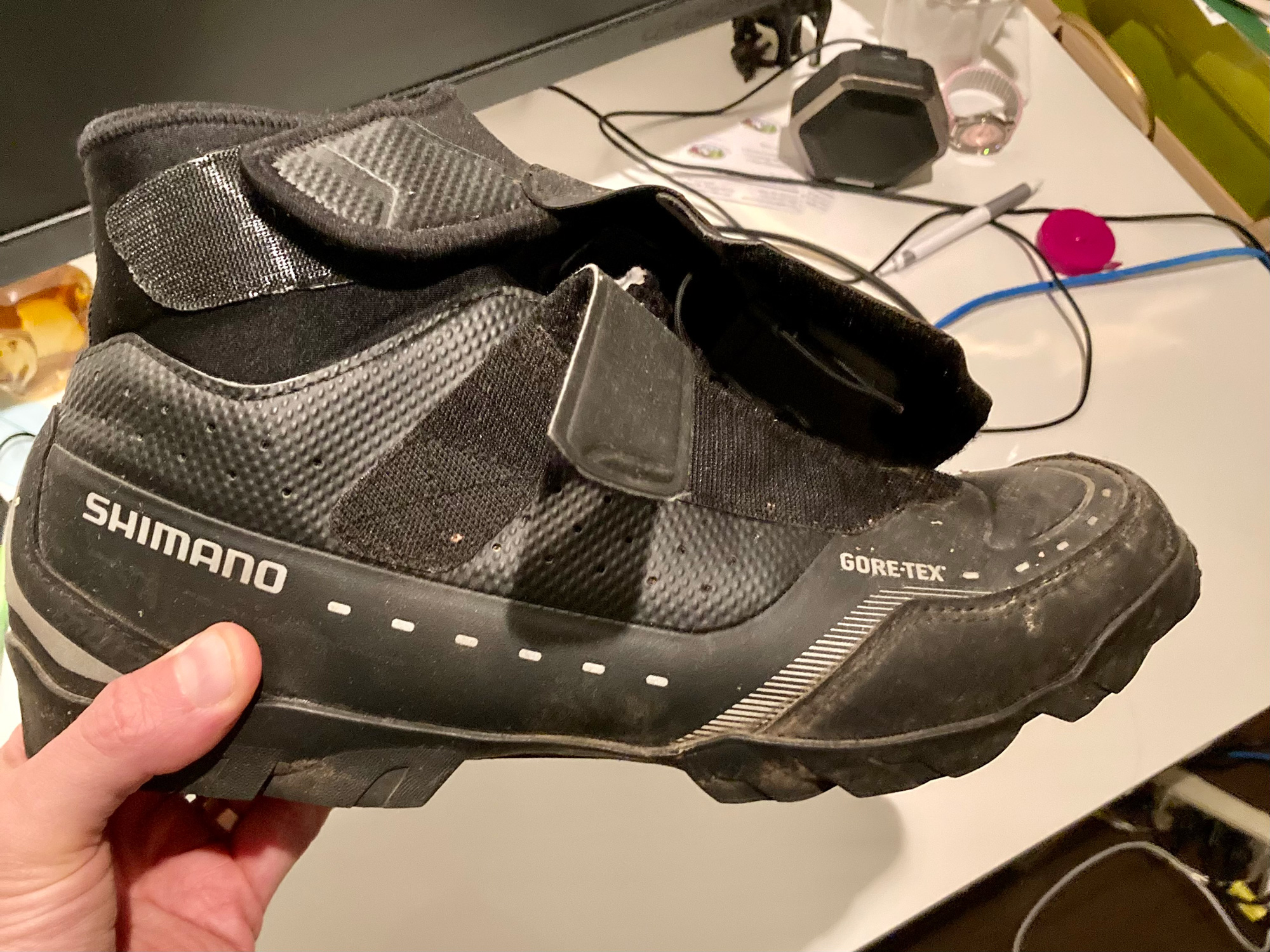
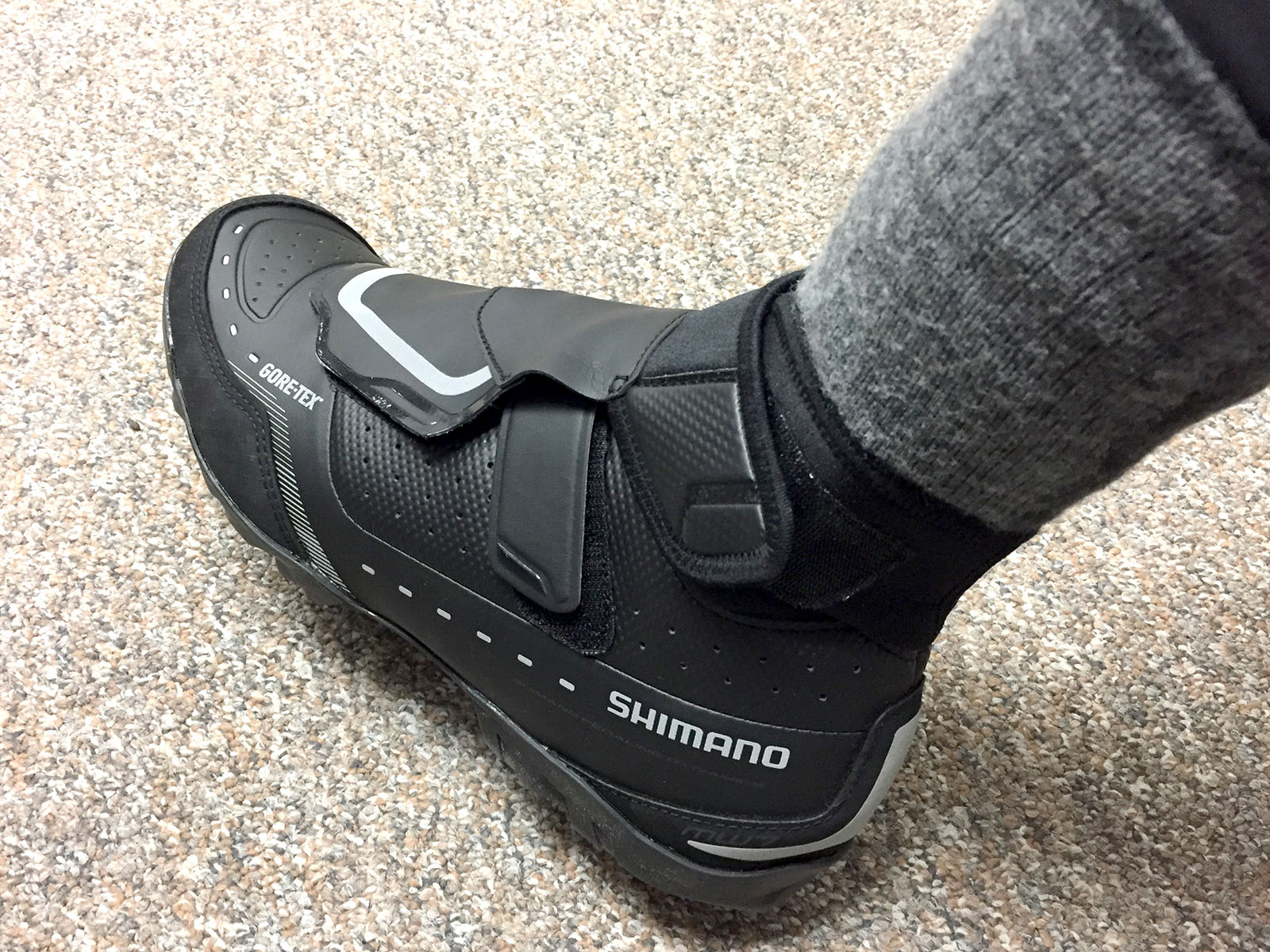

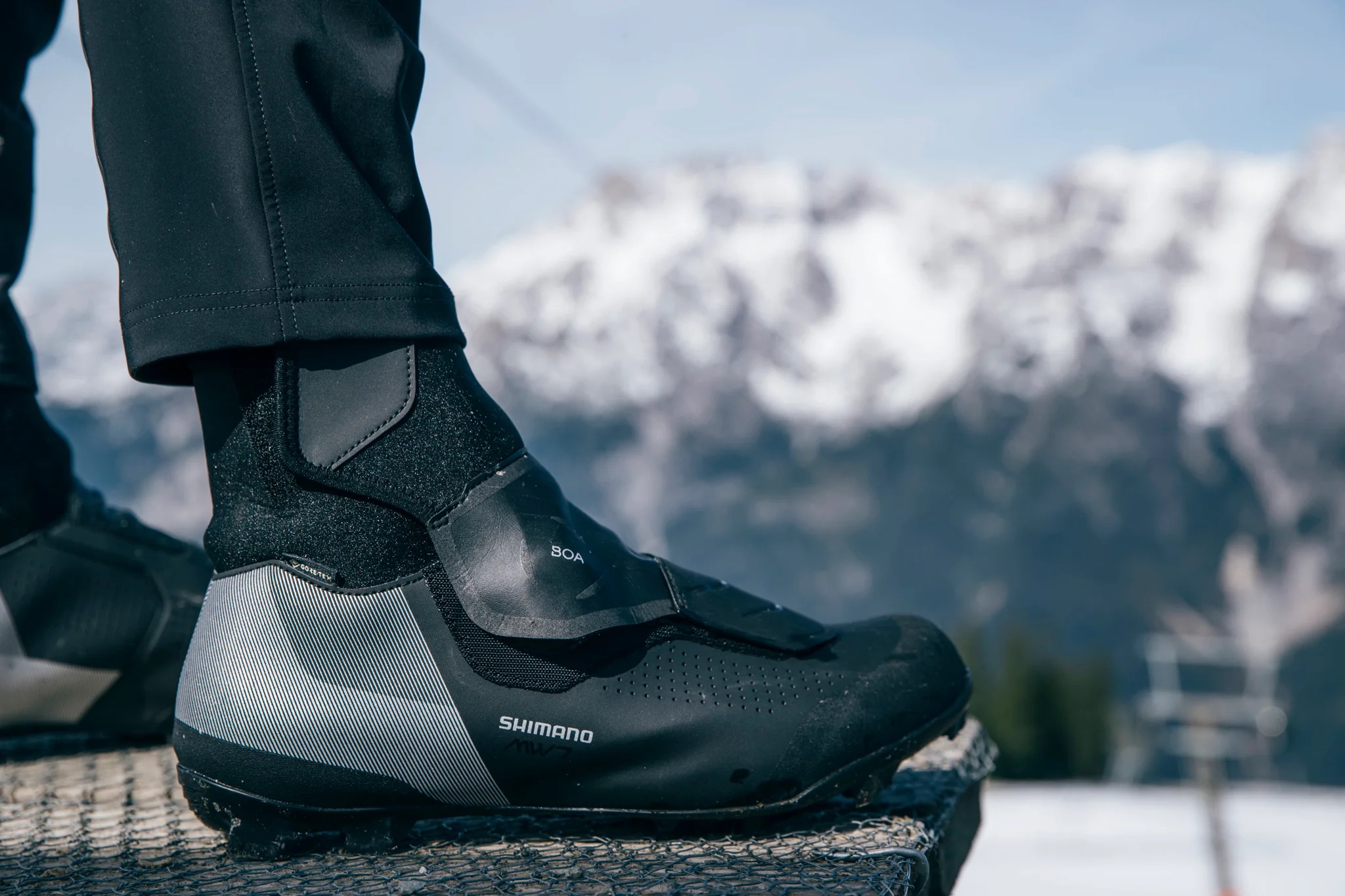
Pros and Cons
Pros
- The ultimate protection
- Superb ease of use
- Good investment if you plan to ride a lot or multiple years
- The most durable of winter protection.
- Ideal if you plan to mountain bike in the wet.
Cons
- Cost – Prepare to spend a two or three hundred dollars
- Can be too warm depending on rider preference , time of year and make of shoe.
- Majority are only a mountain bike cleat (this may-not bother you)
Winter Shoe Design
Just like a beefed up regular shoe with more of an ankle cuff, the winter shoe tends to be heavier and less stiff than a performance cycling shoe. That’s not to say they are floppy, but they are a touch more flexy which allows you to walk in them easily. often have softer soles which have better grips and are great for walking in. many designs have a neoprene like cuff area which is intended to grip around the ankle to stop ingestion of water. Check the designs in this area carefully as some are better than others.
Winter Shoe Materials
Many shoes used advanced materials for waterproofing and insulation for cold proofing. Often lined with good quality goretex or membranes so they are waterproof and breathable. Often the cleat is designed to be more isolated so it stops cold from coming in. The shoes / boots have a higher cuff to keep heat in / water out. They also often have a false tounge or folding flap to make the system even more impermeable.
Winter Shoe Tips
Just like the booties, if you can try them on in person. You will get a sense for how warm they are and also sizing is critical, a too small or large shoe can make them painful and unusable. Also worth thinking about the thickness of sock you will be wearing.
Shimano Link here
Check out this older review of some Shimano MW7 Boots here
Why would you buy these?
If you ride a lot in cold , damp, wet… these are the ultimate bang for the buck, by far the most durable, easy to use and longest lasting.
Cycling Gear that I like
Rock and Roll Gold – Chain Lube – super clean, wont gunk up with proven low friction. Great value.
Pedros Tyre Levers – Virtually unbreakable, easy to use, light and last a long time
Silca Ultimate Sealant : new and improved this Silca sealant clogs and lasts better than the competitors
Fillmore Tublesss Non Clog Valves – a little extra cost will save you a ton of hassle maintenance and worry
Muk Off – Tubeless Valves – great colour options, core removal tool, variety of valve bed seals
Muc-Off Bike Cleaner – effective, easy, non toxic, planet friendly
NOTE: The links in my posts are affiliate links meaning if you click through, I will get paid 1 or 2 cents by the seller if you purchase. This help me pay for website fees etc, and big picture doesn’t impact anything.
- TPU vs. Butyl Tubes: What You Need to Know
- Wahoo Trackr Radar and flashing unit competes with established Garmin Varia for top radar spot
- Crosspoint Gear and Showerspass waterproof knit gloves suck the vapid murk right out of the clouds
- My 2025 Top Indoor Training Accessories for a more enjoyable ride and Better Performance
- Product Review : Maximize Your Cycling with 4iiii (Foureye) Power Meters – Precision 3+ Review
Discover more from Buckyrides
Subscribe to get the latest posts sent to your email.
 Buckyrides
Leave a Reply